
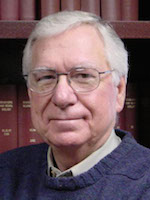
 Research in Dr. James McGaugh's Lab investigated the brain processes underlying the effects of drugs and stress hormones on memory storage. Dr. McGaugh began studies of neurochemical influences on memory storage as a graduate student. In early research, Dr. McGaugh found that, in rats, stimulant drugs enhanced memory when they were administered immediately after training. These findings suggest that the drugs acted to stimulate memory consolidation. Subsequent findings from the laboratory that posttraining administration of stress hormones released by training experiences enhance memory consolidation indicate that activation of endogenous hormone systems plays an important role in modulating the storage of recently acquired information. Considerable evidence from the McGaugh laboratory indicates that the basolateral region of the amygdaloid complex (BLA) is critically involved in mediating drug and hormone effects on consolidation. Lesions and temporary inactivation of the BLA block the drug and hormone effects on memory. Furthermore, infusions of drugs and hormones administered directly into the BLA have effects on memory that are comparable to those of systemic injections. Findings indicate that beta-adrenergic antagonists infused into the BLA block the effects of many drugs and hormones on memory suggest that the effects involve influences on the release of norepinephrine (NE) and activation of beta-adrenoceptors in the amygdala. In support of this view the lab found, in experiments using in vivo microdialysis, that stimulation of the kind typically used in training rats induces the release of NE in the amygdala, and that drugs and hormones affecting memory modulate NE release in the amygdala. Additionally, the amount of NE released following training correlates highly with subsequent retention. Findings of other experiments indicate that the amygdala influences memory by modulating the functioning of other brain regions involved in information storage. Research in the McGaugh laboratory focused on the interaction of the amygdala with other brain regions in regulating memory storage. Additionally, Dr. McGaugh was a pioneer in the field of human memory, and in particular in Highly Superior Autobiographical Memory.
Dr. McGaugh has now retired but his legacy of learning and memory research has been continued by many of the CNLM's Fellows. To learn more about highly superior autobiographical memory and fill out the screening survey visit the Translational Neuroscience Laboratory's website here.
Dr. McGaugh in the news:
 "Imagine being able to remember every day of your life. As Lesley Stahl reports, it's a kind of memory that is brand new to science." from Memory Wizards 60 Minutes Episode
The Gift of Endless Memory
Lesley Stahl reports on Superior Autobiographical Memory on 60 Minutes
Is Superior Memory Really a Form of OCD?
Quick: What did you eat for dinner yesterday? What about this past Saturday? What about the first Saturday in February? Or the first Saturday of February 2006?
Correctly recalling a meal from a few days ago doesn’t really point to any sort of remarkable skill. But recalling a meal from a decade and change ago may put you in the company of people with a condition James McGaugh, a psychologist at the University of California, Irvine, calls “highly superior autobiographical memory” (HSAM), defined by the ability to remember everything that happened on every day of your life.
Article by Cari Romm on Science of Us. Click here to continue reading.
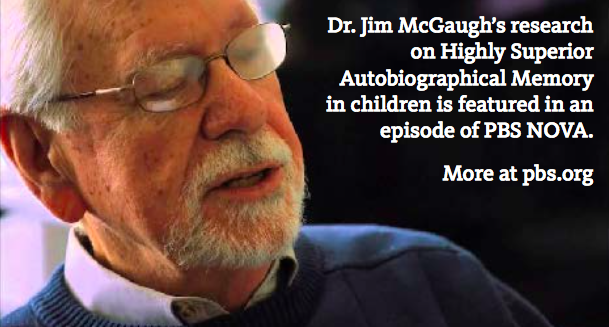 Memory is the glue that binds our mental lives. Without it, we’d be prisoners of the present, unable to use the lessons of the past to change our future. From our first kiss to where we put our keys, memory represents who we are and how we learn and navigate the world. But how does it work? Neuroscientists using cutting- edge techniques are exploring the precise molecular mechanisms of memory. By studying a range of individuals ranging—from an 11-year-old whiz-kid who remembers every detail of his life to a woman who had memories implanted— scientists have uncovered a provocative idea. For much of human history, memory has been seen as a tape recorder that faithfully registers information and replays intact. But now, researchers are discovering that memory is far more malleable, always being written and rewritten, not just by us but by others. We are discovering the precise mechanisms that can explain and even control our memories. The question is—are we ready?
Source: PBS NOVA
Episode first aired on Feb 10, 2016 and is now available on DVD.