
COVID-19 Virus Alters Gene Expression Across Brain Cells
UC Irvine scientists investigate the impact of SARS-CoV-2 on markers and cellular changes associated with Alzheimer’s disease and the aging brain
- UC Irvine researchers find that SARS-CoV-2 infection does not impact Alzheimer’s disease markers in mice, but dramatically alters gene expression across different cell types within the brain
- Researchers infected a mouse model of Alzheimer’s disease with strain of SARS-CoV-2 adapted for mice, measured its impact on Alzheimer’s disease pathology, and identified molecular and cellular changes within the brain
- This study builds upon ongoing research investigating whether neurologic symptoms associated with SARS-CoV-2 and COVID-19 may impact brain aging and contribute to long-term risk for neurodegenerative diseases
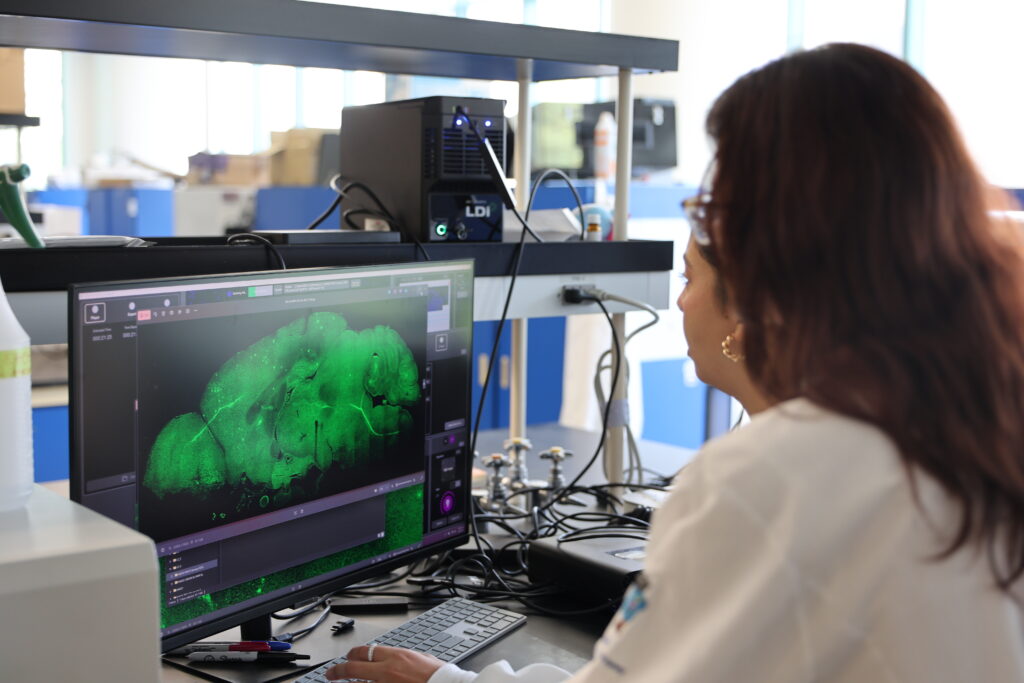
IRVINE, CA – New research from UC Irvine shows SARS-CoV-2 infection did not impact brain pathologies associated with Alzheimer’s disease, but it did result in altered gene expression across multiple cell types within the mouse brain. These findings were published online on April 24, 2026, in the journal Alzheimer’s & Dementia.
SARS-CoV-2 is the virus that causes COVID-19. In addition to severe respiratory problems, patients with COVID-19 also frequently experience neurological symptoms and complications caused by neuroinflammation and disruption of the blood-brain barrier. Older adults with dementia symptoms and Alzheimer's disease were among the most vulnerable. This study contributes to a growing field of research investigating how neuroinflammation contributes to Alzheimer's disease.
In this new study, the research team used a mouse-adapted strain of SARS-CoV-2 to infect both healthy and 5xFAD mice. 5xFAD mice model the aggregation of amyloid-beta (Aβ) plaques associated with Alzheimer’s disease. Using microscopy and cutting-edge techniques in genomic sequencing, the researchers examined how SARS-CoV-2 infection may impact brain function and inflammation during aging and Alzheimer’s disease.
They found that while infection induced acute viral pneumonia, there was no detectable viral RNA found in the brains. Additionally, infection did not appear to affect neuroinflammation levels, amyloid plaque pathologies, or loss of neurons within infected 5xFAD mice. However, using spatial transcriptomic imaging, the researchers identified key gene expression changes induced by SARS-CoV-2 infection across specific cell types while preserving the spatial location of those changes within the brain. The most vulnerable brain cells included inhibitory neurons and glial cells, which provide vital support for healthy, functioning neurons. Microglia, the brain’s resident immune cell, exhibited reduced expression of several key genes associated with homeostasis and steady-state functions. The researchers also found an abundance of microglia expressing markers associated with responses to aggregated amyloid beta plaques in Alzheimer’s disease.
“We initially expected to find overt pathology changes,” said first author Dr. Susana Furman. “Instead, we found that even a mild infection that never entered the brain triggered widespread changes in gene expression across multiple brain cell types, revealing subtle molecular and cellular reprogramming that could influence long-term neurological function.”
Because this study was designed to identify associations rather than establish cause and effect, it cannot determine whether SARS-CoV-2 infection directly caused the observed gene expression changes. Nevertheless, the findings add to growing evidence that even peripheral viral infections may influence the brain, particularly during aging.
According to corresponding author and CNLM Fellow Dr. Thomas Lane, “these persistent changes in gene expression with homeostatic functions in resident brain cells argue that peripheral infection with respiratory viral pathogens may prime the brain for longer-term neurodegeneration.” The researchers say future studies will help identify therapeutic targets to intervene on the potential long-term neurological consequences of COVID-19.
This research was supported by the National Institutes of Health and the Alzheimer’s Association.
Additional authors and collaborators include Latifa Zayou, Kate Inman Tsourmas, Dominic Ibarra Javonillo, Gema M. Olivarria, Yuting Cheng, Collin Pachow, Kellie Fernandez, Lucas Le, Robert A. Edwards, Dequina A. Nicholas, Gabriela Pacheco Sanchez, Kim N. Green, and Thomas E. Lane of University of California, Irvine; and Ralph S. Baric of University of North Carolina, Chapel Hill
This release was prepared by Dr. Dominic Ibarra Javonillo under the editorial supervision of the CNLM communications team.
About the Center for the Neurobiology of Learning and Memory
Established in 1983 by the UC Regents, with James L. McGaugh as its Founding Director, the CNLM is the first research institute in the world dedicated to the interdisciplinary study of the fundamental brain mechanisms of learning and memory. It is credited with numerous seminal discoveries about how memory works and is recognized as a global leader in the area. Led by Director Michael Yassa, the CNLM is home to more than 120 faculty scientists at UCI and beyond. The Center’s Office of Outreach and Education develops and leads innovative neuroscience education programs that inspire and train the next generation of neuroscience leaders. For more information, visit cnlm.uci.edu.
For media inquiries, please contact (949) 824-5193 or manuella.yassa@uci.edu